Truisms That Inspire and Amuse

When writing gets difficult for me, I turn to HL Mencken. The “Sage of Baltimore” was a free thinker and prolific writer in the early 20th century. His writing inspires me, improves my own writing and, I believe, helps me amuse my audience.
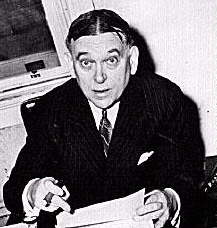
HL Mencken

HL Mencken

As time moves forward, Mencken becomes a little more obscure and misunderstood. But he remains eminently quotable. For example:

Explanations exist; they have existed for all time; there is always a well-known solution to every human problem—neat, plausible, and wrong.

He’s inspired me to collect and share many a truism, bon mot, aphorism and even a few jokes. With that, here are a few anonymous entries from the archives:

  • Bad breath is better than no breath at all.
  • Old age may not have much to recommend it, but generally speaking, it is preferable to the alternative.
  • When you are not sure what to say or how to answer, the only two good choices are to either 1. tell the truth or 2. be quiet.
  • If you want something to be different, you need to do something differently.
  • If you always tell the truth you will never need to remember what lie you told to who.
  • Nothing sucks more than that moment during an argument when you realize you’re wrong.
  • Fall down seven times. Get up eight.
  • Truth is illusory. Rumors are real.
  • “Transparent” is the new buzzword for “buy my product now!”
  • The best way to avoid a fight is to make sure the outcome is obvious before the first punch is thrown.
  • Nobody will ever win the battle of the sexes because there’s too much fraternizing with the enemy.
  • Character is what you are. Reputation is what people think you are.
  • A man who says marriage is a 50-50 proposition doesn’t understand two things: 1. Women. 2. Fractions.
  • The facts, although interesting, are irrelevant.
  • The only difference between a rut and a grave is the depth.

And I close with one more from the “truisms that inspire” archive from Mr. Mencken himself:

The final test of truth is ridicule. Very few dogmas have ever faced it and survived.

CIO Priorities for 2013 from 2,053 Industry Leaders

Every year a Gartner survey summarizes global CIO priorities, and every year I take a very close look at the findings.

The most recent survey was conducted in the fourth quarter in 2012 and included 2,053 CIOs. These individuals span 41 countries and 36 industries. I like this annual survey because it is a well designed study into the priorities driving US$3.7 trillion of spending on information technology and personnel.

CIO Priorities: the Findings

Top 10 Business Priorities

Ranking

Top 10 Technology Priorities

Ranking

Increasing enterprise growth

1

Analytics and business intelligence

1

Delivering operational results

2

Mobile technologies

2

Reducing enterprise costs

3

Cloud computing (SaaS, IaaS, PaaS)

3

Attracting and retaining new customers

4

Collaboration technologies (workflow)

4

Improving IT applications and infrastructure

5

Legacy modernization

5

Creating new products and services (innovation)

6

IT management

6

Improving efficiency

7

CRM

7

Attracting and retaining the workforce

8

Virtualization

8

Implementing analytics and big data

9

Security

9

Expanding into new markets and geographies

10

ERP Applications

10

One of my favorite parts of this survey is that the technology executives are asked about business priorities first. They may be propeller heads at their core, but they understand their primary task is to find ways to align technology with business initiatives and drive strategic results. As a result, top line growth, business expansion, cost control and personnel issues are clearly present in the business priorities. The only item that I’m surprised isn’t explicit ed stated in the business priorities is accelerating product cycles and decision-making.

The technology list is dominated by newer technology that has enough of a track record of delivering disruptive results. The heightened priority suggests that these investments are moving from lab experiments to broad deployment. Cloud and mobile are the talk of Silicon Valley; it’s also found, in my estimation, in 6 of the 10 priorities. Multiyear initiatives where the necessity has out-paced results are also on the list: Analytics, Security, Virtualization and ERP.

Large budget items like desktop hardware, software and support, which in many cases are the largest portions of annual budgets are not strategic topics in this years survey. Likewise, vendor relationships and outsourcing aren’t a priority this year as they’ve been in the past.

Takeaways

  • Its going to be a good year for technology in general as top line growth leads the list of priorities
  • Its not just that CIOs are spending on cloud and mobile, their organizations are benefiting from these technologies
  • Enabling agility from the bottom-up is a big opportunity. From mobile and cloud, to analytics and virtualization, and ERP and CRM, technologies that provide productivity leverage across the organization will be easiest to justify
  • Infrastructure investments won’t be slighted. Organizations will strive to move quickly, but with a strong foundation. Security, scalability and maintainability will be built into to major initiatives. This is a correction to previous years where organization were burned by having to spend on remediation and refactoring to fix mistakes of moving too fast.

What do you think? Comments welcome.

What Does a Sales Funnel Look Like?

A sales funnel is an essential management tools for visualizing the status of sales and marketing operations.

Sales Funnel

The funnel is an apt visual metaphor for virtually every sales process. Many inquiries will enter the top of the funnel. Along the way, some prospective customers abandon your solution while others engage more deeply. In the end, a precious few exit the funnel as paying customers.

But because buyer behavior and sales processes vary greatly across industries, companies and product lines, generic funnel diagrams are of limited use. Think about it: are you satisfied by a picture showing that 1,000 inquiries eventually convert into $199 of revenue? Of course not. The funnel needs to begin with assumptions about your business. From there it needs to be validated, optimized and improved against the reality of buyer behavior and the competitive marketplace. It longs to be a beacon of competitive advantage for your business. It needs to be both predictive and believable.

Eventually, you’ll be able to use your funnel as a model for sales and marketing investments such as sales staffing, lead generation and product roadmaps. It can also become an early warning system for changes in the competitive marketplace, buyer behavior or operational effectiveness.

So what does a sales funnel look like? It looks like your business.

Ideas in the Social Media Era: I’ll Get It Right the 5th Time

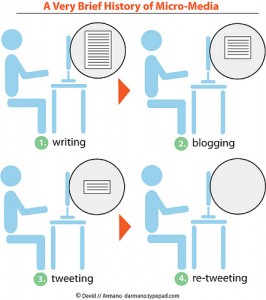
I love this chart. Not only is it funny, it gets to the core of how the social media era is disrupting creativity.

The chart puts its focus on article length (and perhaps the quantity of postings and/or impressions). The chart is silent on quality.

Great ideas have always been distilled to their essence through pity catchphrases. With social media, any idea, even before it’s refined (let alone great) is distilled for social network impact. The network for disseminating ideas is becoming more powerful than ideas themselves.

This is a new challenge for the creator and innovator. When is an idea ready to be published? What are readers’ expectations for quality and accuracy of new ideas? Does it help or hurt your reputation to publish many unrefined ideas? Is your idea sharing risk tolerance dependent on the size and nature of your social network? Are facts and accuracy destined to become endangered species during the social media era?

I don’t know, but I’m going to publish this now and refine it later. My sense of optimism suggests that we’ll muddle through.

It’s a Great Time to Be a Professional Marketer

I just read an inspiring blog post by Megan Heuer at Sirius Decisions called Five B2B Marketing Surprises From 2009. It inspired me to reflect on what I learned in 2009.

The biggest take-away for me is how great the marketing tools and techniques are today compared to just a few years ago. Consider:

  • Twitter (free) to quickly inform and inspire your network
  • WordPress (free) to quickly publish blogs and websites. Additional shout-outs to the vibrant community of WordPress developers contributing plug-ins and themes.
  • Marketo (pricey, but valuable) which teases out the marketing automation functions and processes from general CRM/sales force automation
  • Salesforce.com (pricey, but valuable) for providing an easy to deploy, easy to manage and sales-rep-friendly tool for automating corporate processes for managing customer relationships and the sales process.
  • Microsoft Office (not free), especially Word and Excel, for creating content and managing campaigns. I certainly enjoy using many of the newer tools, but, let’s face it, most of us document the bulk of our original thinking and planning using these tools.
  • Google Analytics (free) to measure and analyze your web traffic and visitor trends.

Not as neat as the tools listed above is the emergence of multi-media publishing. The web is no longer just a medium of the written word. Podcasts, videos, photos, illustrations–even animations and web apps are increasing in popularity among prospects and customers. More on this topic at a later date…

Improved tools are important, but only when combined with a solid foundation of marketing professionalism. Great results are equally dependent on your sound (and stable) strategy, enduring processes and measurements.

The bottleneck in marketing continues to be the pace of creation of relevant, timely and persuasive content. I guess this means that the pace of marketing is limited by the imagination and creativity of the marketing team….a very nice thought.